

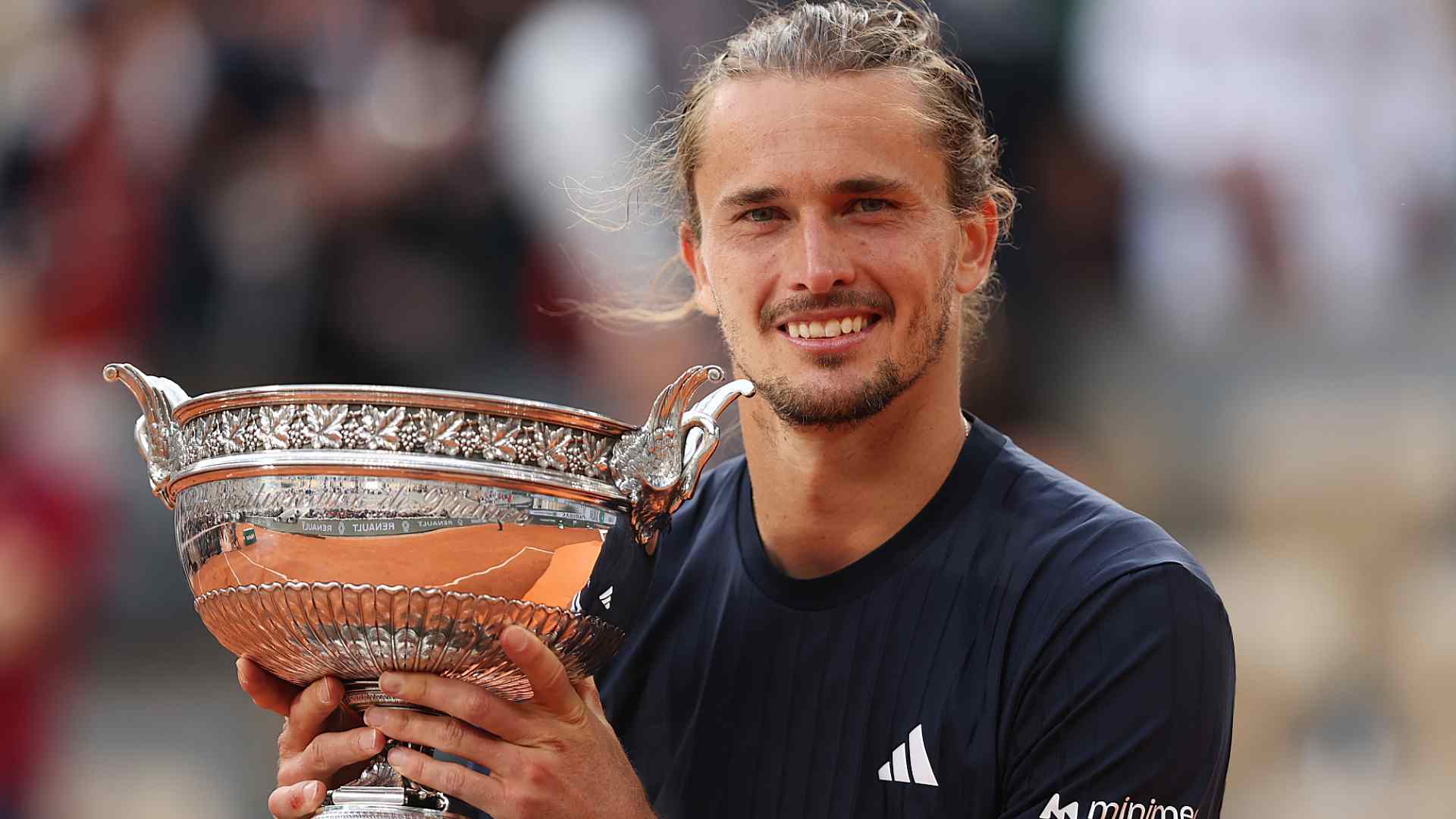
Alexander Zverev has finally done it.
At the 2026 French Open (Roland Garros), he captured his first Grand Slam title after a five-set battle against Flavio Cobolli, becoming the French Open champion and rewriting his career story in the most powerful way possible.
The win also carries historic weight. Zverev becomes the first German man in 30 years to win a Grand Slam singles title since Boris Becker.
But this victory is not just about tennis.
It is about everything he had to overcome to reach it.
At just four years old, Zverev was diagnosed with Type 1 diabetes.
A doctor told him it would limit what he could become.
Professional tennis, they suggested, would be extremely difficult — maybe impossible.
Zverev’s answer never changed:
“I want to play tennis. That’s the only thing I really care about.”
Today, he is not only a Grand Slam champion but also an Olympic gold medalist and one of the top players in the world.
What fans see is performance.
What they don’t see is routine survival management.
Every day begins with blood sugar checks.
Every night ends with insulin.
Every match requires control, awareness, and discipline most athletes never have to think about.
For years, he carried this responsibility quietly, without public attention.
Then came June 2022.
Roland Garros semifinal.
Alexander Zverev versus Rafael Nadal.
He was playing some of the best tennis of his life & was within touching distance of becoming World No. 1.
Then disaster struck.
Chasing a ball late in the match, he severely injured his ankle.
The images were heartbreaking.
A wheelchair.
A stunned crowd.
A season over.
Years of momentum vanished in an instant.
Many athletes never fully recover from injuries of that magnitude. Some never return to the same level physically. Others never recover mentally.
But resilience has always been Zverev's greatest strength.
While recovering from surgery, Zverev made a decision that would inspire millions.
In August 2022, he publicly revealed his Type 1 diabetes diagnosis for the first time and launched the Alexander Zverev Foundation to support children and young people living with diabetes.
For years, he had hidden his condition.
Now he wanted to use his platform to show others what was possible.
His message was simple:
Do not let other people's expectations define your future.
In 2023 at Roland Garros, Zverev faced an unexpected battle off the court.
Officials reportedly questioned his insulin injections during matches, suggesting he should only use them during toilet breaks instead of courtside.
His response was clear:
“If I don’t do it, my life will be in danger.”
Zverev holds a Therapeutic Use Exemption that legally allows him to manage his condition during competition.
Without proper insulin management, blood sugar can drop dangerously low or spike, leading to dizziness, extreme fatigue, or even coma.
He lobbied, he pushed back, and eventually the rules were adjusted — not just for him, but potentially for future athletes as well.
Despite everything, Zverev continued to rise.
Roland Garros semifinal in 2023.
French Open final in 2024, where he led Carlos Alcaraz two sets to one before losing in five sets.
Australian Open final in 2025 against Jannik Sinner, another straight-sets defeat.
Three Grand Slam finals. Three losses.
But no surrender.
After one of those defeats, he said:
“If ever there is a diabetic Grand Slam champion, even if it’s not me, I will be the happiest person in the world.”
Sports psychology has one word for what defines Zverev’s career:
Resilience.
He didn’t wait for ideal conditions — he adapted to them.
He ignored external doubt and trusted his own path.
Daily discipline, not emotion, built his career.
Injuries and defeats didn’t stop him — they reshaped him.
His challenges built the mental strength needed to win at the highest level.
After Grand Slam heartbreaks, injuries, and years of doubt, Zverev finally reached the top.
He is now a French Open champion - and the first German man in decades to win a Slam.
His story is simple but powerful:
Talent opens the door.
Resilience walks you through it.
And sometimes, what others call impossible… becomes history.
Sports betting often focuses on statistics, rankings, head-to-head records, and probabilities.
Those numbers matter.
But sometimes the most important factor cannot be measured.
Character.
Resilience.
Mental strength.
The willingness to continue after setbacks that would make others quit.
Alexander Zverev's career reminds us that the greatest victories are not always reflected on a scoreboard.
Sometimes the greatest victory is refusing to surrender when everyone else thinks you should.
When doctors said it couldn't be done, he kept playing.
When injuries threatened his career, he came back.
When Grand Slam heartbreaks piled up, he kept believing.
And whether or not he ultimately achieves every goal he has set for himself, his legacy has already become larger than tennis.
Because somewhere in the world, a child facing a challenge others call impossible may look at Alexander Zverev and realize something important:
Impossible is often just someone else's opinion.
And history belongs to those who refuse to accept it.
Powered by Froala Editor